Catalogue and filters
Category structure, product attributes, variants and options, filtering and search that stay usable on a large assortment.

A store is not a website with products on it — it is a working tool for your sales team. It has to hold up under load, count stock correctly, take payment without failing and avoid creating manual work for managers. We build stores on OpenCart, Magento and WooCommerce, and on a custom solution when the catalogue or pricing logic does not fit any of them. After launch we stay reachable: sales cannot pause while a bug waits for a fix.
Category structure, product attributes, variants and options, filtering and search that stay usable on a large assortment.
Checkout in as few steps as possible, guest purchase, promo codes, delivery cost calculation and address autocomplete.
Payment providers, cash on delivery, courier services with automatic waybills and shipment tracking.
Product upload by file or on a schedule, stock and price synchronisation with your accounting system or CRM.
A panel a manager actually works in daily: orders, statuses, customers, reports, access rights.
E-commerce tracking, product structured data, clean URLs, meta tags and a sitemap from day one.
How many products, which attributes, where stock and prices come from. This decides both the platform and the catalogue structure.
The buyer path from search to payment and the manager path from order to shipment — both before any design starts.
Catalogue, product page and checkout mockups, then front-end, platform and integrations.
We migrate products, verify payments with test transactions and walk the full order cycle together with your managers.
Go live on the production domain, set up analytics and backups, and stay close through the first weeks of trading.
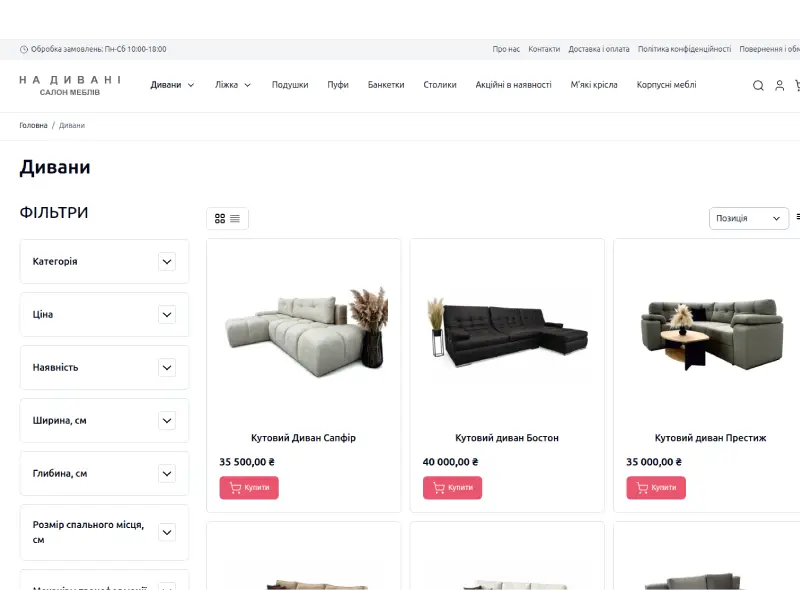
Online furniture store Na Divani

Website for a company specialising in the sale and installation of windows and doors
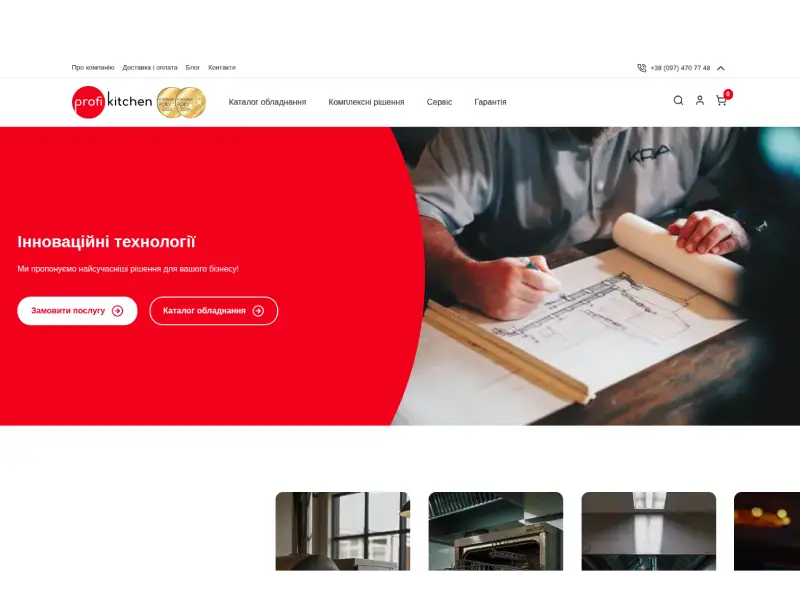
Equipment for the restaurant industry and food service.
from 4,600 USD
Cost depends on catalogue size, number of integrations and how complex pricing and discount logic is. The exact figure is fixed once the structure is agreed — before work starts.
See the full price listIt depends on the assortment and your processes. OpenCart works well for mid-sized catalogues and keeps support affordable. Magento earns its keep on large assortments with complex pricing and multiple warehouses. WooCommerce suits companies already on WordPress where content matters more than complex logic. We propose a custom build only when no platform covers the process.
Yes. We migrate products, categories, customers and orders, preserve the old page addresses or set up 301 redirects so search positions are not lost. Before launch we reconcile the product and page counts against the old site.
Yes, provided the system has an API or supports file exchange. Most often we synchronise stock, prices, new orders and their statuses. Integration scope is agreed separately — it can noticeably affect both timeline and cost.
If the products exist as an export or spreadsheet, we set up an import and load them automatically. Manual entry is possible too, but on a large catalogue it is a separate body of work and is quoted separately.
Yes. Clean URLs, meta tags, product and price structured data, a sitemap, e-commerce analytics and loading speed are part of the baseline. It does not replace ongoing promotion, but without it ads and SEO perform considerably worse.
Contact us for a free consultation. We will discuss your idea and find the best solution.
Contact usMessage us
Pick whatever suits you — we reply during working hours.